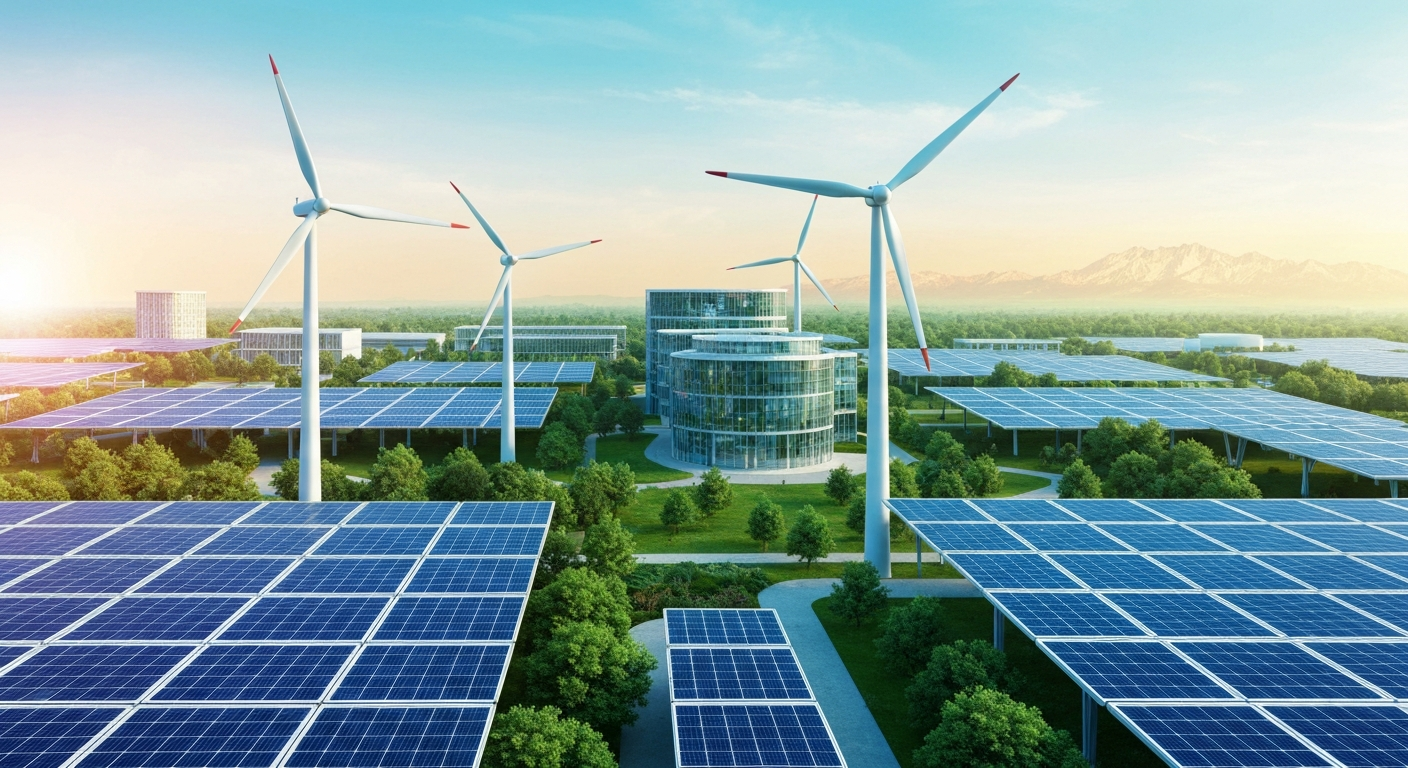
The United States is undergoing a significant transformation in its energy landscape, driven by the increasing urgency to address climate change and the decreasing costs of renewable energy technologies. But what's really happening with Renewable Energy in the USA, and where is it heading? Let's dive in.
Executive Summary: The Rise of Renewables in the USA
Renewable energy is rapidly gaining traction in the United States, accounting for approximately 25% of total U.S. electricity generation in 2025 (U.S. Energy Information Administration (EIA), January 2026). This growth is fueled by advancements in solar and wind technologies, supportive government policies, and increasing corporate sustainability initiatives. The transition is not without its challenges, but the overall outlook for renewable energy in the USA is exceedingly promising.
Renewable Energy USA: Current Trends and Key Statistics
The renewable energy sector in the United States is experiencing robust growth across various technologies. Solar and wind power are leading the charge, but other sources like hydropower, geothermal, and biomass are also contributing to the overall increase in renewable energy generation.
- Solar Energy: Solar energy capacity in the U.S. saw a remarkable 20% increase in 2025, reaching a total installed capacity of over 150 GW (Solar Energy Industries Association (SEIA), February 2026). This surge is attributed to decreasing costs, technological advancements, and increasing demand from residential, commercial, and industrial sectors. The cost of solar photovoltaic (PV) electricity has decreased by over 85% since 2010 (International Renewable Energy Agency (IRENA), 2025), making it increasingly competitive with fossil fuels.
- Wind Energy: Wind energy accounted for over 10% of total U.S. electricity generation in 2025 (American Clean Power Association (ACP), March 2026). The U.S. has vast wind resources, particularly in the Midwest and Great Plains, making it a prime location for wind energy development. Technological advancements in wind turbine design and operation have further improved the efficiency and cost-effectiveness of wind power.
- Investment: Investment in renewable energy projects in the U.S. reached $75 billion in 2025, a 15% increase compared to 2024 (BloombergNEF, January 2026). This significant investment underscores the growing confidence in the long-term viability and profitability of renewable energy projects.
"The transition to renewable energy in the US is no longer a question of 'if' but 'how fast'. Policy support, technological innovation, and market forces are all aligning to accelerate the deployment of clean energy technologies." - Dr. Sarah Miller, Energy Policy Analyst at the Brookings Institution, March 2026
Why Renewable Energy in the USA Matters
The shift towards renewable energy in the USA is not just about reducing carbon emissions; it has far-reaching implications for the economy, society, and culture.
- Economic Impact: The renewable energy sector is a significant job creator, providing employment opportunities in manufacturing, installation, maintenance, and related industries. It also reduces reliance on imported fossil fuels, bolstering energy security and reducing trade deficits. The investment in renewable energy infrastructure stimulates economic growth and creates new business opportunities.
- Social Impact: Increased reliance on renewable energy improves air quality and public health, particularly in communities that have historically been disproportionately affected by pollution from fossil fuel power plants. This transition helps to reduce health disparities and improve the overall quality of life for millions of Americans.
- Cultural Impact: The widespread adoption of renewable energy is fostering a greater awareness of environmental issues and promoting a sense of collective responsibility for addressing climate change. It is also driving innovation and entrepreneurship in the clean energy sector, leading to the development of new technologies and business models.
However, the transition also presents challenges. The intermittency of some renewable energy sources, such as solar and wind, requires upgrades to the electricity grid and the development of energy storage solutions. There's also a need to address the potential displacement of workers in the fossil fuel industry through retraining and workforce development programs.
Future Outlook: Renewable Energy Dominance by 2030?
The future of renewable energy in the U.S. looks bright. Experts predict that renewable energy sources will account for over 50% of total U.S. electricity generation by 2030. This growth will be driven by continued technological advancements, supportive government policies, and increasing consumer demand for clean energy.
- Technological Advancements: Improved battery storage technologies will enable the more efficient storage and dispatch of renewable energy, addressing the intermittency challenge. Smart grid technologies will enhance the reliability and efficiency of the electricity grid, enabling it to accommodate a higher penetration of renewable energy sources.
- Policy Support: Tax credits, renewable energy standards, and other policy incentives will continue to play a critical role in driving investment and deployment. The Biden administration's ambitious climate goals, including achieving a carbon pollution-free electricity sector by 2035, will further accelerate the transition to renewable energy.
- Challenges and Opportunities: Permitting delays, supply chain constraints, and public acceptance of renewable energy projects are some of the challenges that need to be addressed. Overcoming these challenges will require collaboration between government, industry, and communities. The transition also presents opportunities for innovation, entrepreneurship, and job creation in the clean energy sector.
"We are seeing unprecedented demand for solar energy solutions across all sectors, from residential to commercial and industrial. The economics of solar are simply too compelling to ignore, and businesses are increasingly recognizing the long-term benefits of investing in clean energy." - John Davis, CEO of SunPower, February 2026
Lessons from Other Countries
Other countries have successfully transitioned to renewable energy, offering valuable lessons for the U.S.
- Germany (Energiewende): Germany has made significant progress in transitioning to renewable energy but faces challenges related to grid stability and energy storage.
- Denmark (Wind Power Leadership): Denmark is a global leader in wind power, demonstrating the potential for high renewable energy penetration.
- Costa Rica (Renewable Energy Pioneer): Costa Rica has consistently generated over 98% of its electricity from renewable sources, showcasing the feasibility of achieving a nearly 100% renewable energy system.
[Sources]
- U.S. Energy Information Administration (EIA)
- Solar Energy Industries Association (SEIA)
- American Clean Power Association (ACP)
- BloombergNEF
- International Renewable Energy Agency (IRENA)
- Brookings Institution
- National Renewable Energy Laboratory (NREL)
- Department of Energy (DOE)