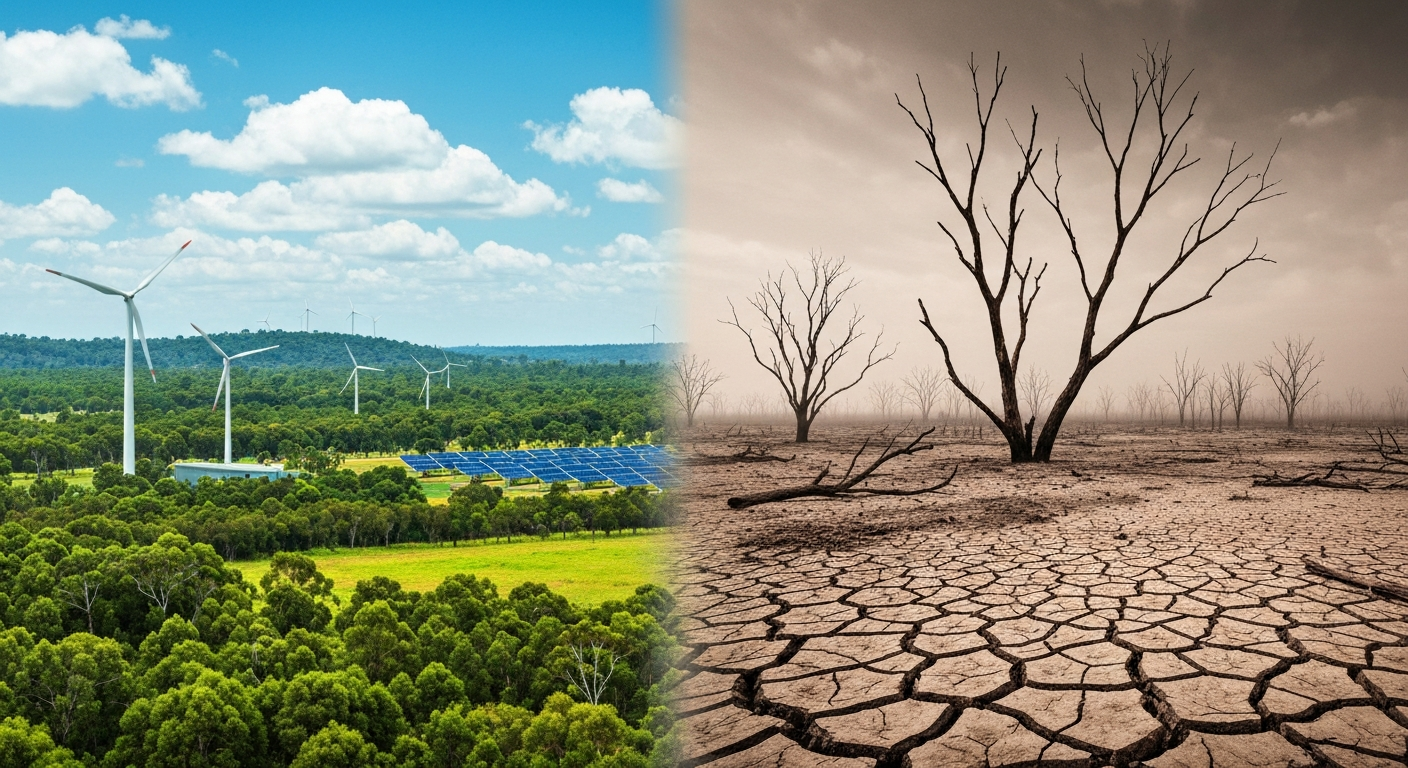
The national carbon tax debate in Australia has reached a fever pitch, fueled by increasingly visible climate change impacts, a looming federal election, and stark economic warnings about inaction. The discussion is no longer theoretical; it's a battleground where economic realities clash with environmental imperatives, and the stakes are exceptionally high for Australia's future.
Recent extreme weather events – from severe droughts plaguing agricultural regions to unprecedented bushfires and coastal erosion exacerbated by rising sea levels – have served as a brutal wake-up call. These events have amplified public concern and placed immense pressure on the government to adopt more decisive climate action. As the federal election approaches in late 2026, political parties are sharpening their positions, with the opposition party championing a renewed carbon tax as a means to achieve Australia's emissions reduction targets. This proposal has ignited a firestorm of debate, drawing strong reactions from industry groups and various segments of the population.
Adding further urgency to the debate is the release of a new report by the Climate Change Authority, which projects substantial economic costs associated with failing to address climate change. This report paints a grim picture of lost productivity and infrastructure damage, reinforcing the need for immediate and effective policy interventions.
Economic Realities and Political Divides
The core of the debate revolves around the economic implications of a carbon tax. While proponents argue that it's a necessary tool to incentivize emissions reductions and stimulate investment in renewable energy, critics warn of its potential to harm Australian businesses and consumers.
Australia's emissions increased by 1.2% in 2025, according to the Department of Climate Change, Energy, the Environment and Water, highlighting the urgent need for effective mitigation strategies. Yet, the path forward is fraught with challenges. The Australian Industry Group estimates that a carbon tax of $50 per tonne of CO2 equivalent would increase electricity prices by 15% for industrial users, raising concerns about competitiveness and job losses. This figure is a crucial point of contention, fueling opposition from industry groups who argue for a "technology-neutral approach" that supports innovation without harming the economy.
Mr. John Miller, CEO of the Australian Mining Council, argues that "A carbon tax would significantly increase the cost of doing business for Australian mining companies, making us less competitive in global markets. This could lead to job losses and reduced investment in the sector. We need a technology-neutral approach that supports innovation and reduces emissions without harming the economy."
On the other hand, a recent poll by the Australian National University reveals that 68% of Australians support stronger government action on climate change, including a carbon tax or emissions trading scheme. This demonstrates a significant level of public support for climate action, even if it comes with potential economic costs. The Climate Change Authority estimates that inaction on climate change could cost the Australian economy a staggering $423 billion by 2070 in lost productivity and infrastructure damage. This figure underscores the long-term economic risks of failing to address climate change.
Renewable energy sources accounted for 35% of Australia's electricity generation in 2025, up from 29% in 2023, indicating a growing shift towards cleaner energy sources. A carbon tax could further accelerate this transition by making fossil fuels less competitive and incentivizing investment in renewable energy projects.
Expert Perspectives and Policy Considerations
Expert opinions on the carbon tax are divided, reflecting the complexity of the issue. Climate economists emphasize the potential benefits of a well-designed carbon tax in driving emissions reductions and clean energy investment.
Dr. Sarah Johnson, a Climate Economist at the University of Melbourne, states that "A well-designed carbon tax can be an effective tool for reducing emissions and driving investment in clean energy technologies. However, it is crucial to ensure that the revenue generated is used to support vulnerable households and industries to mitigate any negative impacts."
This highlights the importance of carefully designing the carbon tax to minimize its negative impacts on vulnerable households and industries. Revenue generated from the tax could be used to provide financial assistance to low-income households, invest in retraining programs for workers in affected industries, and support the development of new clean energy technologies.
Comparable cases from other countries offer valuable lessons for Australia. Canada implemented a national carbon tax in 2019, with revenue returned to provinces that did not have their own carbon pricing systems. While the tax has been credited with reducing emissions, it has also faced political opposition and legal challenges. Sweden introduced a carbon tax in 1991, which is now one of the highest in the world. Sweden has significantly reduced its emissions while maintaining strong economic growth, demonstrating that a carbon tax can be compatible with economic prosperity. However, these examples also demonstrate that carbon taxes are not a silver bullet and require careful implementation and ongoing adjustments to ensure their effectiveness and political viability.
Future Outlook and Societal Impact
The future of the carbon tax debate in Australia remains uncertain, largely dependent on the outcome of the upcoming federal election. A change in government could lead to the implementation of a carbon tax, while the current government may opt for alternative mechanisms for carbon pricing or emissions reduction. Regardless of the political outcome, the debate is likely to persist as Australia strives to meet its international climate commitments and transition to a low-carbon economy.
The debate is having a profound impact on Australian society. The uncertainty surrounding climate policy is affecting investment decisions in energy and infrastructure. Businesses are hesitant to commit to long-term projects without a clear understanding of the future regulatory environment. The debate is also polarizing public opinion, with strong divisions between those who support a carbon tax as a necessary step to address climate change and those who fear its potential economic consequences. This polarization is evident in online discussions, media coverage, and political discourse. Ultimately, the carbon tax debate is forcing Australians to confront the challenges of balancing economic growth with environmental sustainability and to consider the long-term implications of their actions for future generations. The choices made today will shape the future of Australia's economy, environment, and society for decades to come.
[Sources]
- Department of Climate Change, Energy, the Environment and Water, 2026 Emissions Update
- ANU Centre for Social Research and Methods, Climate Change Survey
- Climate Change Authority, The Cost of Inaction Report
- Australian Industry Group, Carbon Tax Impact Assessment
- Australian Energy Market Operator (AEMO), Quarterly Energy Dynamics Report
- Australian Financial Review
- The Australian
- ABC News
- RenewEconomy
- Climate Change Authority reports
- Department of Climate Change, Energy, the Environment and Water reports
- Australian Energy Market Operator (AEMO) reports