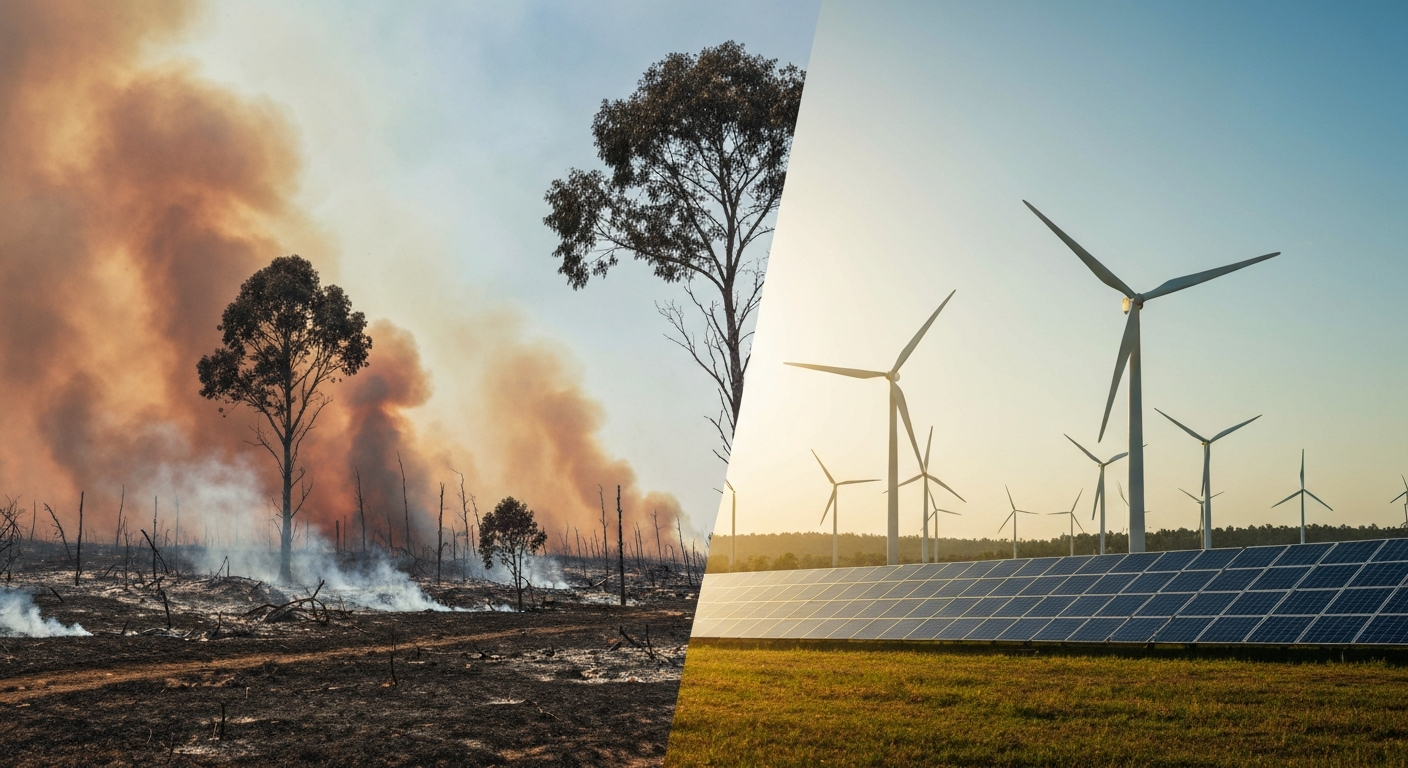
The "National Carbon Tax Debate 2.0" has reignited in Australia, driven by the increasingly visible impacts of climate change and the perceived shortcomings of current emissions reduction strategies. With the 2027 federal election looming, and extreme weather events becoming more frequent and severe, the pressure is on the government to adopt more decisive climate action. This report delves into the key statistics, expert opinions, and potential impacts of a renewed carbon tax debate in Australia.
The Climate Crisis Catalyzing Change
Australia's vulnerability to climate change is no longer a distant threat; it's a present reality. Severe droughts have ravaged agricultural regions, and unprecedented bushfire seasons have caused widespread devastation. These events have galvanised public concern and intensified calls for stronger climate policies. Adding fuel to the fire is the expiration of the Safeguard Mechanism's initial phase in 2025. The subsequent debate surrounding its effectiveness and future design has reopened the door to discussions about alternative carbon pricing mechanisms, most notably a carbon tax.
According to the Department of Climate Change, Energy, the Environment and Water, Australia's emissions increased by 1.2% in the year to December 2025. This alarming trend underscores the urgent need for more effective climate policies. The Australian Energy Market Operator (AEMO) projects that renewable energy sources will account for 82% of Australia's electricity generation by 2030 under current policies. However, AEMO also warns that achieving net-zero emissions by 2050 will require further policy interventions. The Business Council of Australia estimates that the economic cost of inaction on climate change could reach $211 billion by 2050, a stark reminder of the potential economic consequences of failing to address this issue.
A poll conducted by the Australian National University in February 2026 revealed that 62% of Australians support some form of carbon pricing, including a carbon tax or emissions trading scheme. This demonstrates a significant level of public support for measures aimed at reducing carbon emissions. However, translating this support into concrete policy action remains a challenge, given the political complexities and vested interests involved.
Expert Perspectives on Carbon Pricing
The debate surrounding a carbon tax is not simply a political one; it's also an economic one. Experts hold differing views on the most effective way to reduce emissions while minimizing economic disruption.
"While a carbon tax is politically challenging, it remains the most economically efficient way to reduce emissions. The current Safeguard Mechanism is a step in the right direction, but it needs to be strengthened and complemented by other measures, including a carbon price signal," argues Professor Ross Garnaut, an economist at the Australian National University.
Jennifer Westacott, CEO of the Business Council of Australia, echoes the need for policy certainty to encourage investment in low-emissions technologies.
"Businesses need policy certainty to invest in low-emissions technologies. A well-designed carbon pricing mechanism, whether it's a carbon tax or an emissions trading scheme, can provide that certainty and drive innovation. However, it must be implemented in a way that minimizes the impact on competitiveness and protects energy-intensive industries," she stated at the Australian Financial Review Business Summit in April 2026.
The Australian government's current emissions reduction target is 43% below 2005 levels by 2030. Achieving this target will require a combination of policies, including investments in renewable energy, improvements in energy efficiency, and potentially a carbon pricing mechanism.
Potential Impacts and Future Outlook
The "National Carbon Tax Debate 2.0" has significant potential impacts on Australia's economy, society, and culture. Economically, the implementation of a carbon tax could lead to higher energy prices, potentially impacting industries reliant on fossil fuels and increasing the cost of living for households. However, it could also stimulate investment in renewable energy and clean technologies, creating new jobs and boosting economic growth in those sectors. Socially, the debate can exacerbate existing divisions between urban and rural communities, as well as between different socio-economic groups, depending on how the revenue generated from the carbon tax is distributed. Culturally, the debate reflects a broader shift in Australian society towards greater environmental awareness and a growing demand for government action on climate change.
The future of the debate hinges on the outcome of the 2027 federal election. If the Labor government is re-elected, it is likely to continue refining the Safeguard Mechanism and exploring complementary carbon pricing measures. A change in government could lead to the repeal of the Safeguard Mechanism and the adoption of alternative climate policies, potentially including a more direct form of carbon tax or a greater reliance on voluntary emissions reductions. Regardless of the political outcome, the pressure to reduce emissions will continue to grow, driven by the increasing impacts of climate change and international commitments under the Paris Agreement.
Looking at comparable cases, Canada implemented a national carbon tax in 2019, while Sweden introduced one as early as 1991. In the UK, a carbon price floor was implemented in 2013. All three countries show that carbon pricing, while politically difficult, can be a tool for emissions reduction, though the exact design and implementation matter greatly.
The debate is likely to evolve beyond a simple carbon tax versus no carbon tax discussion, focusing instead on the optimal mix of policies to achieve Australia's emissions reduction targets while minimizing economic disruption. The next few years will be crucial in shaping Australia's climate policy landscape and determining its future role in the global effort to combat climate change.